
Pelvic Floor Physical Therapy for C-Section Recovery
This blog contains links to videos we have posted on our instagram account to show examples of the postpartum exercises, stretches, and scar massage.
Cesarean sections (C-sections) are a common and often life-saving way to bring babies into the world. Understanding C-section recovery, postpartum healing, and how your pelvic floor and core are affected after a cesarean birth can help you heal more comfortably and regain strength after delivery.
In the United States, the C-section rate was approximately 32.3% to 32.4% of all live births in 2023–2024, meaning about one in three deliveries happens this way. C-sections can be planned in advance or done as emergency procedures. Common reasons include:
• The baby is in a breech or unusual position
• Labor isn’t progressing
• Concerns about the baby’s heart rate
• Multiple births (twins, triplets, etc.)
• Health conditions affecting the mother or baby
While C-sections are routine, they are still major abdominal surgeries, and recovery deserves thoughtful care and attention.
What Happens During a C-Section?
A C-section involves carefully moving through several layers of the body to safely reach the baby. The process is methodical and designed to minimize trauma and support healing.
Skin
The procedure begins with an incision in the skin, usually a horizontal cut low on the abdomen (often called a bikini incision). This incision tends to heal well and leaves a less noticeable scar.
Fat (Subcutaneous Tissue)
Beneath the skin is a layer of fatty tissue. This layer is gently opened to expose structures underneath while controlling small blood vessels to reduce bleeding.
Fascia (Connective Tissue Layer)
The fascia is a strong connective tissue layer that supports the abdominal muscles. It is incised and carefully repaired during closure
Abdominal Muscles
The abdominal muscles are typically not cut. Instead, they are separated along the midline, helping reduce muscle damage and preserve core strength.
Peritoneum and Uterus
The peritoneum is opened to access the uterus. The uterus is then incised, most commonly with a low horizontal cut, allowing the baby to be delivered.
How C-Sections Affect the Body & Common Postpartum Side Effects
• Scar pain to touch or with clothing
• Numbness or tingling around the scar
• An abdominal shelf due to scar tension
• Diastasis recti
• Pelvic floor muscle tension
• Bowel or bladder changes
• Back pain
• Postural changes
Postpartum Healing Timeline & Tips
0–2 Weeks: Rest & Gentle Breathing (Link to video HERE)
• Focus on rest as much as possible
• Practice gentle diaphragmatic breathing
• Lie flat on your back for 5–15 minutes, 1-2 times daily, if comfortable
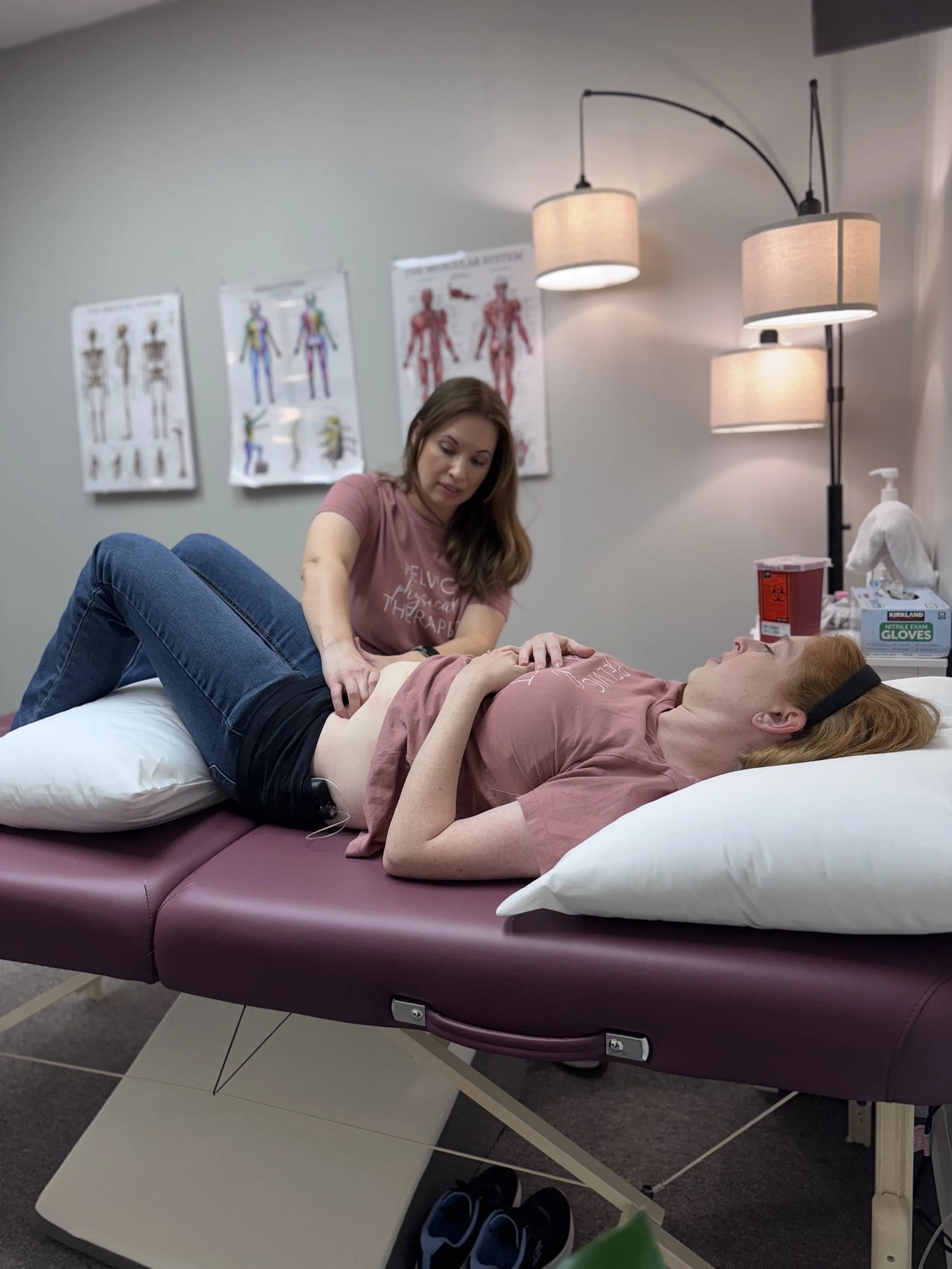
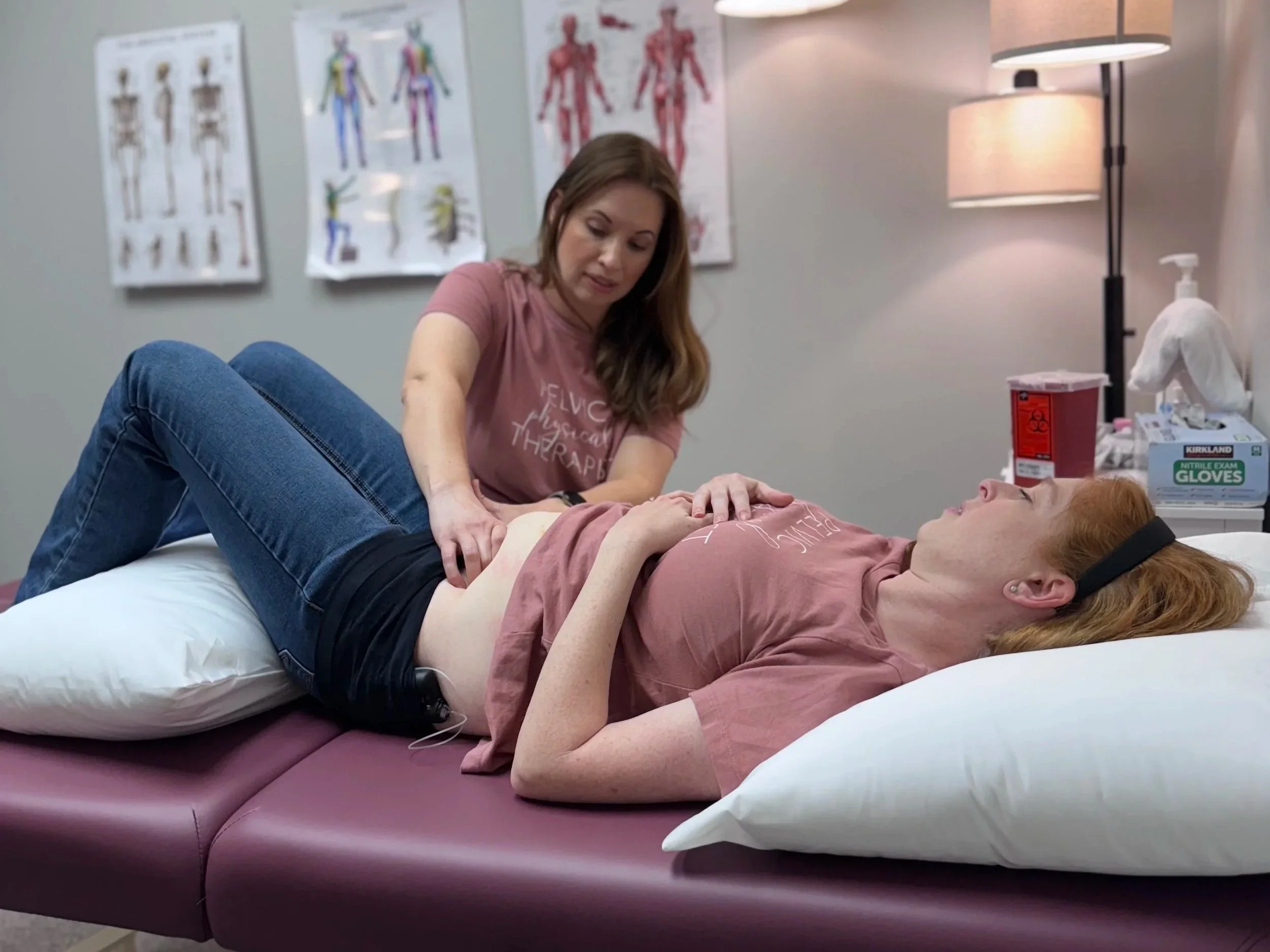
Around 2 Weeks: Scar Desensitization (Link to video HERE)
• Use soft materials like a makeup brush, silk fabric, or soft garment
• Lightly rub over the scar for 3–5 minutes daily
4–6 Weeks: Tissue Mobility & Scar Care (Link to video HERE)
• Begin massaging around the scar and look for tight or tender areas and apply gentle pressure
• Consider silicone strips or silicone gels once healed
10 Weeks and Beyond: Direct Scar Massage (Link to video HERE)
• Begin direct scar massage when cleared by your provider
• Use a nourishing oil such as almond or vitamin E oil
• Progress gradually with light pressure and small circles
Postpartum Stretches lying down/on the bed (Link to video HERE)
• Hip flexor stretch
• Open book stretch
• Butterfly stretch (lying flat)
Postpartum Stretches on the floor (Link to video HERE)
• Cat/Cow
• Thoracic spine stretch over a rolled towel or foam roller
• Modified cobra
Postpartum Strength Exercises (Link to video HERE)
• Abdominal bracing during exhales while lifting your baby
• Bridges from the floor
• Bird Dog
• Sit-to-stands from a chair
• Squeezing your shoulder blades together with good posture
Final Thoughts
C-section recovery is not just about healing a scar. It involves restoring function across your entire core system. A gradual and intentional approach can help reduce pain, improve mobility, and support long-term strength.
If something doesn’t feel right, especially with pelvic symptoms or core weakness, working with a pelvic floor physical therapist can be incredibly beneficial! CLICK HERE to schedule an evaluation with us if you live in Middle Tennessee!